
Retatrutide is a triple-hormone agonist (GLP-1/GIP/glucagon) showing record-breaking fat-loss results in clinical trials.
Cagrilintide is an amylin analog that enhances satiety and may complement GLP drugs.
Combined, they could form a next-gen weight loss injections stack, targeting appetite, metabolism, and energy expenditure.
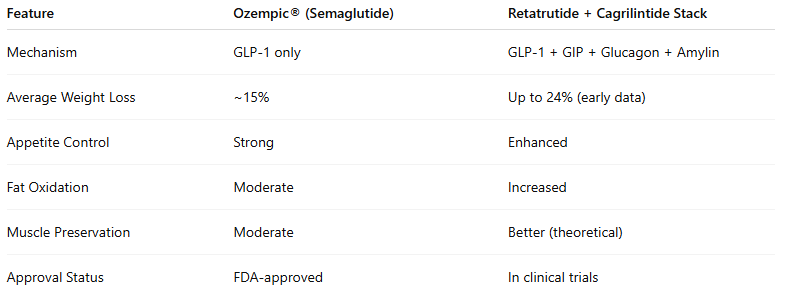
Early data suggest this duo may surpass Ozempic® (semaglutide) in both speed and magnitude of results.
Both drugs are still under investigation; safety, dosing, and FDA approval are pending.
Retatrutide (LY3437943) is Eli Lilly’s experimental triple-agonist drug that activates:
GLP-1 (Glucagon-like peptide-1) – reduces appetite and slows digestion
GIP (Glucose-dependent insulinotropic peptide) – enhances insulin sensitivity
Glucagon receptor – increases fat metabolism and energy expenditure
In phase-2 trials, Retatrutide achieved up to 24% body-weight reduction—rivaling or even surpassing bariatric surgery outcomes.
Cagrilintide (NN00739) is a synthetic analog of amylin, a hormone released with insulin that promotes satiety and slows gastric emptying.
It works differently from GLP-1 drugs, acting as a complementary mechanism:
Increases fullness signals to the brain
Decreases cravings and meal frequency
Helps sustain steady blood-sugar control
Cagrilintide has been studied both as a solo treatment and in combination with semaglutide, showing synergistic weight-loss effects beyond either alone.
Researchers are now exploring the potential synergy between Retatrutide + Cagrilintide, combining GLP-1/GIP/glucagon activation with amylin signaling for multi-pathway fat loss.
This stack could theoretically:
Suppress appetite more effectively than semaglutide
Enhance calorie burn via glucagon activation
Preserve lean mass while reducing fat mass
Stabilize hunger hormones for long-term maintenance
In early data and preclinical models, this combination produced unprecedented fat-loss percentages, suggesting a paradigm shift in obesity medicine.
Potential Benefits:
Greater total fat loss
Reduced hunger and cravings
Possible metabolic improvements beyond semaglutide
May help maintain results long-term
Considerations:
Not yet FDA-approved
Side effects may overlap (nausea, constipation, fatigue)
Long-term safety data still limited


